Three Failures, One Landmark Case, and the Lawyer Nobody Wanted to Be
The Case Nobody Wanted
In the spring of 1961, a manila folder landed on the desk of a young attorney named Vera Hollins in a cramped office on the second floor of a building in Birmingham, Alabama. The folder contained the details of a desegregation case involving a public school district that had spent the better part of a decade finding creative legal ways to ignore a Supreme Court mandate.
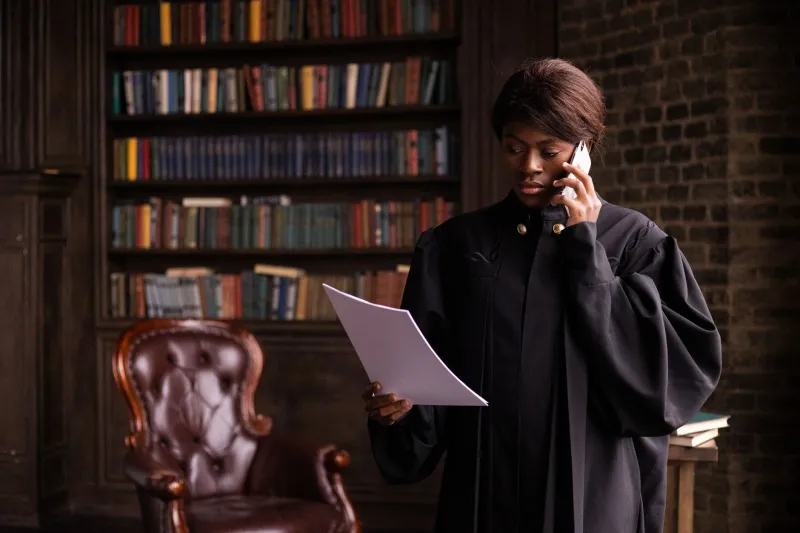
 Photo: Vera Hollins, via i.pinimg.com
Six attorneys had already looked at the file. Six had passed.
The case was complicated, politically radioactive, and likely to consume years of work with no guarantee of outcome. The community it was meant to serve was exhausted and skeptical. The opposing counsel was a team of experienced litigators with institutional backing and zero interest in losing.
Hollins had passed the bar on her third attempt, eighteen months earlier. She had no major victories to her name. She had, by most conventional measures, already failed more times than her profession found acceptable.
She took the case.
A Legal Education Built From Setbacks
Vera Hollins had not arrived at the law through an easy door. Raised in rural Georgia by a schoolteacher mother who believed ferociously in education and a father who worked two jobs to fund it, she had earned a scholarship to a historically Black college in Atlanta and graduated near the top of her class. Law school had followed — and so had the first wall.
The bar exam in the early 1950s was, for Black women in the South, not simply a test of legal knowledge. It was a gauntlet designed, if not always explicitly, to limit who got through. Hollins failed her first attempt by a narrow margin, reapplied, failed again, and spent the next year working as a legal secretary while she studied — watching other attorneys practice the craft she was being kept from.
That period, she would later say, was the most valuable education she ever received.
She watched how cases were built and how they fell apart. She watched which arguments landed with judges and which ones sounded like they'd been written for a law review rather than a courtroom. She watched, in particular, how the human element of a case — the texture of lived experience — was routinely flattened into procedural language until it was unrecognizable to the people it was supposed to represent.
When she finally passed the bar on her third attempt, she carried all of that with her.
The Instincts That Credentials Don't Teach
What Hollins brought to the Birmingham case wasn't a perfect resume. It was something harder to quantify and considerably more difficult to manufacture: an instinct for what actually mattered.
The established attorneys who had passed on the case had done so, in part, because the evidentiary record was messy. The school district's compliance failures were real but diffuse — spread across years of administrative decisions, budget allocations, and bureaucratic inaction that were individually defensible and collectively damning. Building a case from that required patience, pattern recognition, and a willingness to do work that didn't look impressive until it was finished.
Hollins was built for exactly that.
She spent eight months in records rooms and school board archives before she filed a single motion. She interviewed parents, teachers, and students with the kind of unhurried attention that came from years of watching, not performing. She constructed a timeline of noncompliance so meticulous that opposing counsel reportedly spent their first look at her brief trying to find the team of attorneys who must have helped her build it.
There was no team. There was one woman who had failed enough times to stop caring about looking like she knew what she was doing and start focusing on whether she actually did.
The Verdict
The case concluded in 1963 with a federal ruling that not only mandated immediate desegregation of the district in question but established a standard for measuring compliance that courts across the South would apply for years afterward. The decision cited Hollins's evidentiary framework extensively.
She was thirty-four years old.
The ruling didn't make national headlines the way some civil rights victories did. It was procedural, technical, and slow-burning — exactly the kind of case that reshapes things without announcing itself. But among civil rights attorneys, it was recognized immediately as a landmark, and Hollins's name began appearing in conversations it had been conspicuously absent from before.
What the System Filters Out
Vera Hollins went on to a career that included dozens of significant civil rights cases, a teaching position at a law school in Atlanta, and a body of work that influenced a generation of attorneys who came after her.
But the more interesting question — the one her story insists on asking — is what the legal system almost lost.
Every filtering mechanism in her profession had told her she wasn't good enough. The bar exam had said it three times. Her colleagues had said it with their silence when the Birmingham file was passed around. The institutional logic of the legal world, which rewards credentials and early momentum and punishes stumbles, had categorized her as a marginal figure before she had the chance to prove otherwise.
The system was wrong. And it was wrong in a way that matters, because Hollins wasn't an exception to the rule — she was evidence that the rule itself was broken.
The lawyers who sail through without setback learn to practice law. The ones who fail and keep going learn something harder to name — a feel for what's real, what's resilient, and what will hold up when everything else is under pressure.
Vera Hollins knew exactly what would hold up. She had tested it against herself for years before she ever walked into a courtroom.