
The Boy Nobody Wanted
Harry Frederick Harlow was born Harry Frederick Israel in 1905, but that name didn't last long. His birth parents gave him up before his first birthday, unable or unwilling to care for another mouth to feed in rural Iowa.
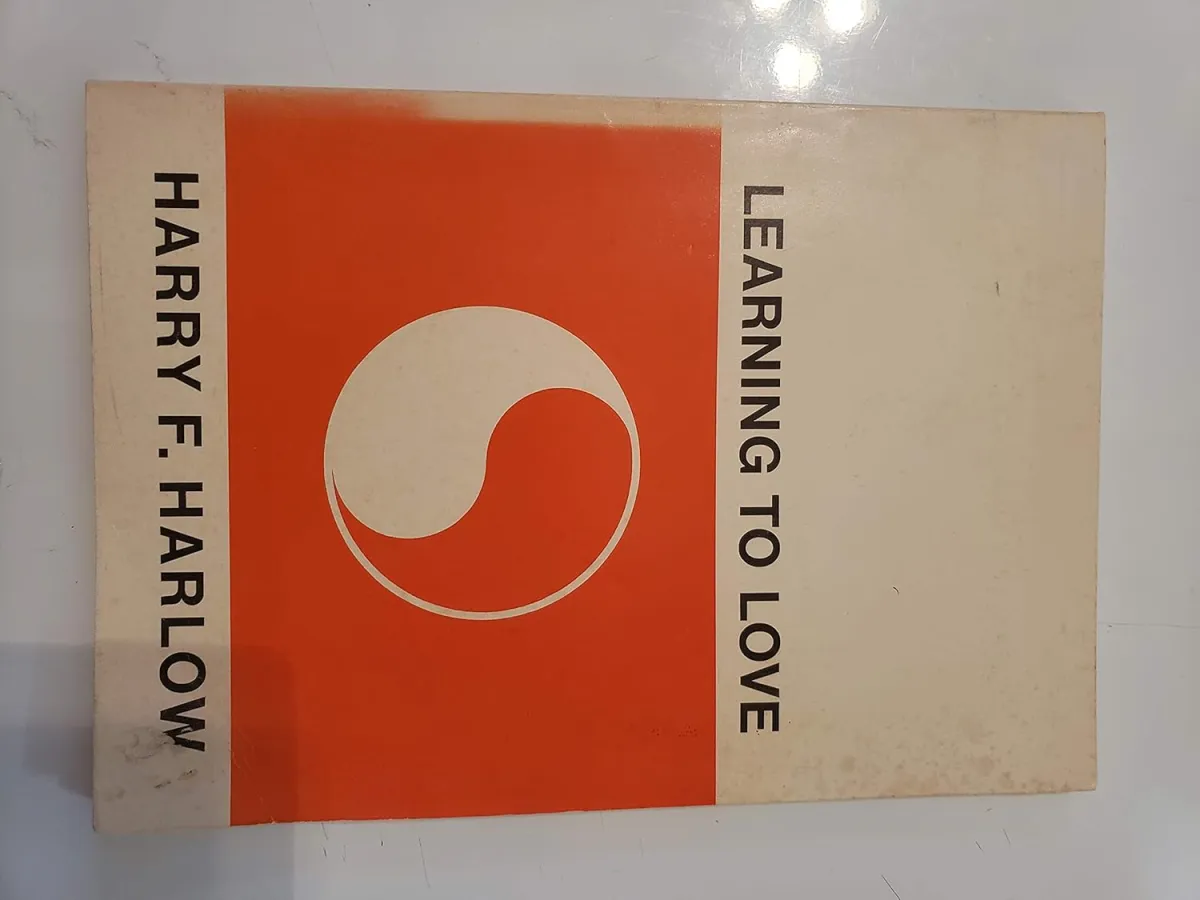 Photo: Harry Frederick Harlow, via m.media-amazon.com
The family that took him in — the Harlows — provided food, shelter, and education. What they didn't provide was the sense that he truly belonged. Harry grew up knowing he was different, that his place in the family was conditional, that the people raising him had chosen to take him in rather than being bound to him by blood.
It was a childhood marked by emotional distance that would have broken some children. Instead, it taught Harry Harlow to observe human connection from the outside, to study the bonds between people with the detached curiosity of someone who had never quite experienced them himself.
That perspective would eventually revolutionize psychology.
The Student Who Didn't Fit the Mold
Harlow's academic journey was as unconventional as his childhood. He enrolled at Stanford University in 1924, initially planning to study English literature. But literature felt too subjective, too dependent on interpretations he wasn't sure he could trust.
Psychology offered something more concrete — the promise of understanding human behavior through observation and experimentation. The field was still young, dominated by behaviorists who believed that all human action could be explained through stimulus and response, reward and punishment.
Harlow wasn't convinced. His own experience suggested that human motivation was more complex, more mysterious than simple conditioning could explain. But he was just an undergraduate from Iowa with an unconventional background. Who was he to challenge established theory?
The Rejection That Shaped Everything
After completing his bachelor's degree at Stanford, Harlow applied to Harvard for graduate school. Harvard was the pinnacle of American psychology, home to the most distinguished researchers in the field.
They rejected him.
The rejection letter was polite but clear: Harvard didn't think Harry Harlow had what it took to contribute meaningfully to psychological research. His undergraduate work was solid but unremarkable. His background was too ordinary. They suggested he consider a career in teaching rather than research.
Harlow stayed at Stanford for his graduate work instead, a decision that would prove fortunate in ways no one could have predicted.
The Laboratory That Became a Revolution
In 1930, Harlow established his own research laboratory at the University of Wisconsin. It wasn't prestigious — Wisconsin was considered a backwater compared to the Ivy League institutions dominating psychology. But that outsider status gave Harlow something invaluable: freedom to pursue research that established academics might have dismissed.
 Photo: University of Wisconsin, via assets-global.website-files.com
He began studying rhesus monkeys, initially focusing on learning and problem-solving. But as he observed the animals day after day, something else captured his attention: the bonds between mothers and infants.
The prevailing wisdom in psychology was that these bonds were purely functional. Babies attached to mothers because mothers provided food. Love, according to behaviorist theory, was just conditioned response to nourishment.
Harlow's own experience suggested otherwise.
The Experiments That Changed Everything
In the 1950s, Harlow designed a series of experiments that would become some of the most famous — and controversial — in psychology history. He separated infant monkeys from their mothers and gave them two artificial surrogates: one made of wire that provided milk, and one covered in soft cloth that provided no food.
According to behaviorist theory, the infants should have preferred the wire mother that fed them. Instead, they spent most of their time clinging to the cloth mother, only visiting the wire mother when hungry.
The implications were staggering. The experiments proved that attachment wasn't just about food or survival. There was something deeper, something that looked remarkably like love.
The Outsider's Advantage
Harlow's research revolutionized psychology precisely because he approached it as an outsider. The established researchers at Harvard and other elite institutions were too invested in existing theories to see what was right in front of them.
But Harlow, who had grown up observing human connection from the margins, understood something his more credentialed colleagues missed: that the need for contact, comfort, and emotional security was as fundamental as the need for food or shelter.
His childhood experience of conditional belonging, of never quite fitting in, had taught him to see patterns that others took for granted.
The Field That Didn't Exist Until He Created It
Harlow's work laid the foundation for attachment theory, now considered one of the most important frameworks in developmental psychology. His research influenced everything from parenting practices to treatment of mental illness to understanding of human relationships.
But when he began his research in the 1930s, this field didn't exist. The idea that emotional bonds were worthy of scientific study was considered soft, unscientific, beneath the attention of serious researchers.
Harlow created the field by refusing to accept that human connection was too mysterious or subjective to understand.
The Recognition That Came Too Late
By the 1960s, Harlow's work was transforming psychology. He received the National Medal of Science, the highest honor in American science. Harvard — the institution that had rejected him 30 years earlier — invited him to give prestigious lectures.
But recognition came with a cost. The same experiments that made Harlow famous also made him controversial. Critics argued that separating infant monkeys from their mothers was cruel, that the pursuit of scientific knowledge didn't justify causing emotional suffering.
Harlow struggled with these criticisms, particularly as he aged. The man who had spent his career studying connection found himself increasingly isolated, haunted by questions about whether his research methods had been ethical.
The Legacy of an Unwanted Child
Harlow died in 1981, his reputation complicated by both his revolutionary discoveries and the controversial methods he used to achieve them. But his fundamental insight — that love and attachment are not luxuries but basic human needs — has only grown more influential over time.
Modern parenting, therapy, and education are all shaped by understanding that emerged from Harlow's laboratory. The idea that emotional security is as important as physical safety, that connection matters as much as achievement, that being unwanted can cause lasting damage — these concepts seem obvious now, but they weren't before Harlow proved them scientifically.
The Paradox of Belonging
There's a profound irony in Harry Harlow's story. The child who never quite belonged, who grew up studying human connection from the outside, became the scientist who taught the world how belonging actually works.
His early experience of rejection — by his birth parents, by his adoptive family's emotional distance, by Harvard's admissions committee — gave him a perspective that more secure, more accepted researchers couldn't have achieved.
Sometimes the greatest insights come from those who have been forced to observe from the margins, who understand the importance of something precisely because they've lived without it.
Harlow's life proves that being unwanted isn't the end of the story. Sometimes it's the beginning of understanding what everyone else has been missing all along.