The Plan That Started in Shadows
For four years, Kathrine Switzer trained in secret. Not because she was planning something illegal, but because what she wanted to do was supposedly impossible.
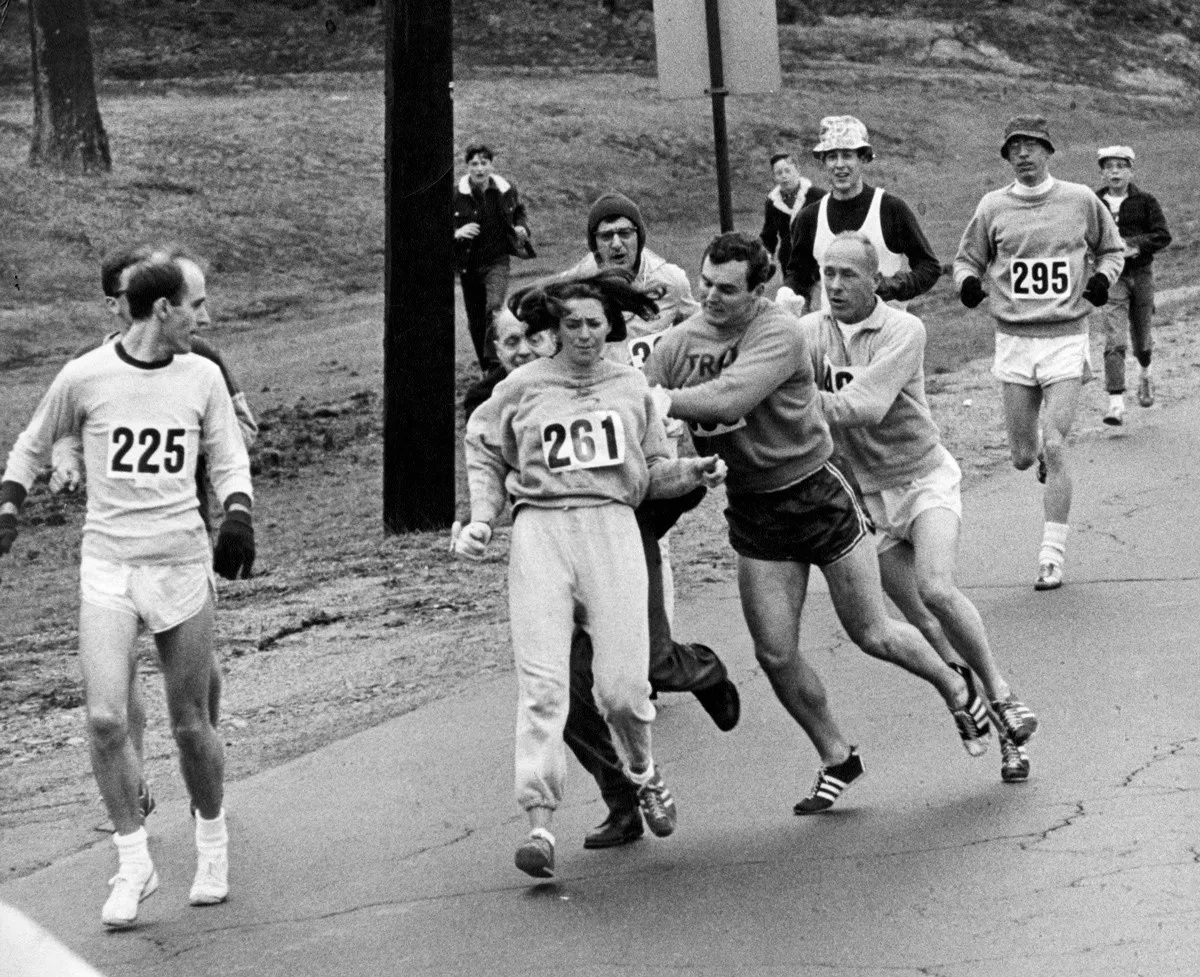 Photo: Kathrine Switzer, via cdn.mos.cms.futurecdn.net
Women weren't allowed to run the Boston Marathon. Not officially. The Amateur Athletic Union had declared in 1966 that women were physically incapable of running distances longer than 1.5 miles without risking "severe biological damage." The Boston Athletic Association agreed. Their marathon was for men only, and had been since 1897.
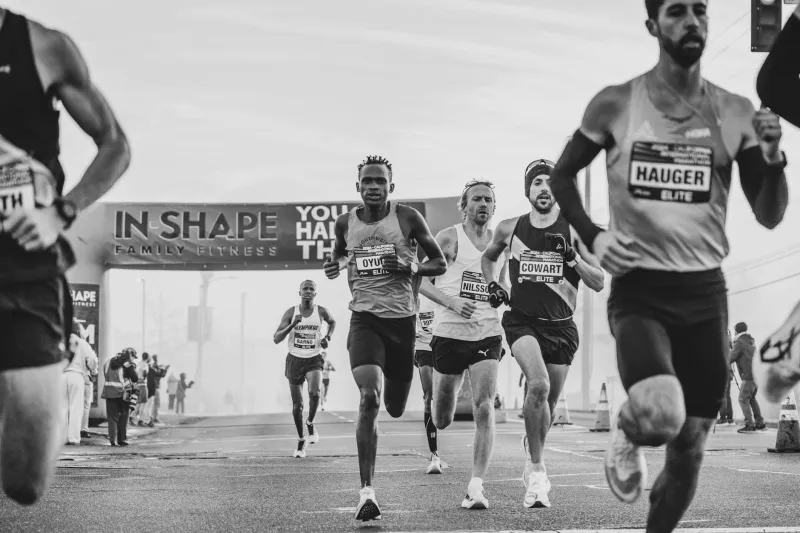
 Photo: Boston Marathon, via www.maraton.info
But Switzer had been running since high school. By 1967, at Syracuse University, she was logging miles that would make seasoned marathoners wince. Her coach, Arnie Briggs, initially scoffed at her ambition. "Women can't run marathons," he told her. "You'll die."
So she ran 31 miles with him to prove her point.
The Registration That Changed History
On a cold February day in 1967, Switzer walked into the Boston Athletic Association office with her registration form. She had signed it "K.V. Switzer" — her actual initials, but ambiguous enough to slip past assumptions.
The official behind the desk barely looked up. He processed her entry like any other, assigned her bib number 261, and sent her confirmation in the mail. Just like that, K.V. Switzer became the first woman officially registered for the Boston Marathon.
But registration was only the beginning.
Mile 4: When Everything Changed
April 19, 1967. Patriots' Day in Massachusetts. The morning was raw and wet, typical Boston spring weather that had been humbling runners for seven decades.
Switzer started near the back of the pack, wearing a gray sweatshirt with the hood pulled up. For the first few miles, she was just another runner in a sea of 741 others. Her boyfriend Tom Miller ran alongside her, along with coach Arnie Briggs, who had eventually agreed to support her attempt.
Then, around mile 4, the press truck spotted her.
The photographers started shouting. Word spread quickly through the officials' cars following the race. A woman was running. A woman was officially entered.
Race director Jock Semple was apoplectic.
The Grab Heard Around the World
What happened next became one of the most famous photographs in sports history.
Semple jumped off the officials' bus and chased after Switzer. "Get the hell out of my race!" he shouted, grabbing at her bib number, trying to physically remove her from the course.
The photo captured the exact moment: a middle-aged man in a suit lunging at a young woman whose only crime was running. Miller, a 235-pound hammer thrower, body-checked Semple away from Switzer with a hit that sent the official flying.
"Run like hell!" Miller yelled.
So she did.
The 22 Miles That Mattered Most
What the famous photograph doesn't show is what came after. The remaining 22 miles that Switzer had to run while processing what had just happened.
She thought about quitting. The attention was overwhelming, the hostility palpable. Officials continued to follow her, some spectators jeered, and she knew the controversy would only grow.
But she also realized something else: millions of women were watching. Not just at the race, but through the photographs and news coverage that would follow. If she stopped, the narrative would be that women really couldn't handle the distance. That they didn't belong.
"I knew if I quit, nobody would ever believe that women had the capability to run 26-plus miles," she later said. "I had to finish."
Crossing More Than a Finish Line
Switzer finished the 1967 Boston Marathon in 4 hours and 20 minutes. Not a fast time, but that wasn't the point. She had completed every step of the 26.2-mile course as an officially registered participant.
The aftermath was swift and predictable. The Amateur Athletic Union banned women from competing in events with men. Switzer was expelled from the organization. The Boston Athletic Association declared that her registration had been fraudulent and that she would never be welcome back.
But the image of Jock Semple trying to drag her off the course had already traveled around the world. The visual was too powerful, the symbolism too clear. A young woman running, and the establishment literally trying to stop her.
The Revolution That Started With One Race
Switzer didn't stop running. She spent the next five years organizing, advocating, and proving that women belonged in distance running. She founded the International Running Center and helped create the Avon International Women's Marathon.
By 1972, women were officially allowed to run the Boston Marathon. The first women's Olympic marathon was held in 1984. Today, women make up more than half of all marathon finishers in the United States.
None of this was inevitable. It required someone willing to register under initials, train in secret, and keep running when officials tried to physically remove her from the course.
The Numbers Tell the Story
In 1967, exactly one woman finished the Boston Marathon officially. In 2023, more than 14,000 women crossed that same finish line.
That transformation didn't happen because attitudes gradually changed on their own. It happened because one person refused to accept that a rule was permanent simply because it had never been questioned.
Kathrine Switzer's four years of secret training weren't preparation for a race. They were preparation for a revolution that started with 26.2 miles and changed everything that came after.