Twelve Years Behind Bars for Nothing — Then She Built the Bridge Home for 47 Others
The Knock That Changed Everything
Sarah Chen was packing for a business trip to Istanbul when the knock came. It was 2003, and the 28-year-old marketing consultant had just landed her first major international client. The excitement of expanding her fledgling agency overseas made her ignore the nagging voice that whispered maybe next month when her Turkish contact suggested they meet in person.
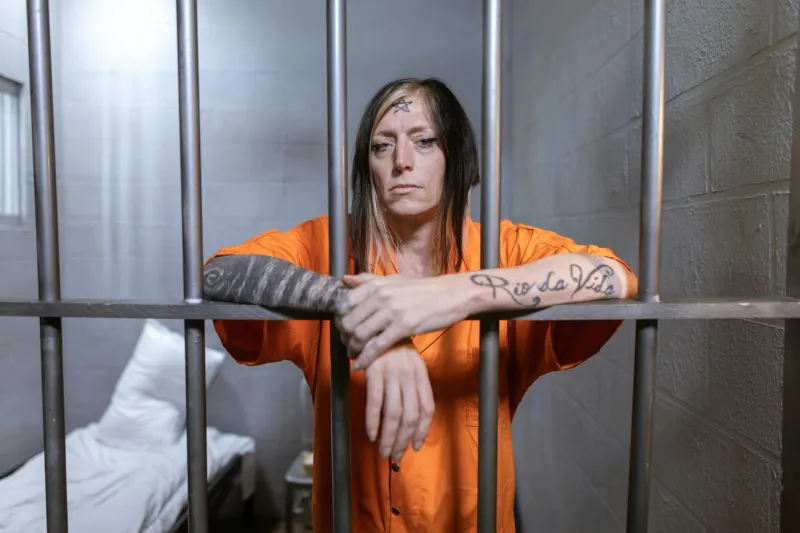
Three days later, she was sitting in a concrete cell, accused of industrial espionage she'd never heard of, holding documents she'd never seen, facing charges that could keep her locked up for life.
The crime? Allegedly photographing sensitive infrastructure while touring a textile factory. The evidence? A camera roll that Turkish authorities claimed contained state secrets, though Sarah insisted she'd only taken pictures of fabric samples for her client back in Chicago.
When Your Government Becomes a Stranger
For the first two years, Sarah believed the system would work. American citizens don't just disappear into foreign prisons, right? The embassy visits would sort this out. The lawyers would find the truth. Her family's connections would pull the right strings.
Except none of that happened.
The consular visits came once every six months, if at all. The overworked embassy staff treated her case like paperwork to be filed rather than a life to be saved. Her family's frantic calls to senators and congressmen generated form letters expressing "concern" but little action.
"I spent two years waiting for rescue," Sarah recalls. "Then I realized I was waiting for a cavalry that wasn't coming."
The Turkish legal system moved at its own pace, and American diplomatic pressure amounted to strongly worded letters that everyone ignored. Sarah's case became one of hundreds of Americans caught in foreign legal systems, forgotten by a bureaucracy that saw individual lives as acceptable casualties in larger diplomatic games.
Learning the Language of Survival
Year three marked Sarah's transformation from victim to student. If she was going to survive—and eventually prove her innocence—she needed to understand the system that had swallowed her whole.
She taught herself Turkish through conversations with guards and fellow inmates. She studied Turkish law through smuggled textbooks, memorizing statutes and procedures that her own lawyers had dismissed as too complex for a foreigner to understand. Most importantly, she began mapping the informal networks that actually controlled her fate—which guards had influence, which lawyers had real connections, which bureaucrats could expedite or delay critical paperwork.
"Prison taught me that every system has cracks," she says. "But you can only find them if you stop looking from the outside."
By year five, Sarah was helping other foreign inmates navigate their cases. By year seven, she was corresponding with families across America whose loved ones faced similar situations in different countries. A informal network began forming around her prison cell—families sharing information, strategies, and hope.
The Evidence That Changed Everything
Sarah's break came in year eleven, not through diplomatic channels or legal appeals, but through a Turkish investigative journalist who'd been tracking corruption in the prosecutor's office. The journalist discovered that the evidence against Sarah had been fabricated as part of a scheme to extract bribes from foreign businesses.
The revelation made headlines in Turkey but barely registered in American media. Still, it was enough. After twelve years, Sarah Chen walked out of Ankara Central Prison with a full pardon and an apology from the Turkish government.
She also walked out with something else: a complete blueprint of how Americans get lost in foreign legal systems, and how to find them.
Building Bridges from Broken Trust
Back in Chicago, Sarah discovered that her old life had evaporated. Her business was gone, her savings depleted by legal fees, her relationships strained beyond repair. At 40, she was starting over with nothing but hard-won expertise in a field that didn't officially exist.
That expertise became the foundation of Americans Abroad Legal Defense Network (AALDN), which Sarah launched from her sister's spare bedroom in 2016. The organization operates on a simple principle: the American government's consular services are designed for tourists with lost passports, not citizens facing serious criminal charges overseas.
AALDN fills that gap by providing what Sarah never had—immediate response, local legal expertise, family coordination, and sustained advocacy that doesn't end when the news cycle moves on.
The 47 Who Made It Home
Today, AALDN has secured the release of 47 Americans from foreign prisons, detention centers, and legal systems across 23 countries. Each case follows the playbook Sarah developed during her own imprisonment: rapid response to establish local legal representation, family education about foreign legal systems, sustained media pressure, and diplomatic advocacy that goes beyond form letters.
The organization's success rate stems from Sarah's understanding that every country's legal system has its own logic, its own pressure points, and its own informal networks. What works in Turkey won't work in Thailand, but the principles remain the same: understand the system, find the right people, and never stop fighting.
"People ask me if I'm angry about the twelve years," Sarah says. "But those years taught me how to save others from the same fate. Forty-seven families got their loved ones back. That's not nothing."
The Setback That Became a Mission
Sarah's story illustrates a truth that runs through many remarkable lives: sometimes our greatest setbacks become our most powerful qualifications. Her twelve years in a Turkish prison weren't wasted time—they were an inadvertent graduate program in international legal advocacy that no university could have provided.
Today, AALDN operates with a staff of 12 and an annual budget of $3.2 million, funded by private donations and grants. Sarah splits her time between Washington DC, where she lobbies for improved consular services, and crisis response, where she personally coordinates the most complex cases.
The organization she built from her prison cell experience now stands as America's most effective advocate for citizens trapped overseas. Every successful case validates the same lesson Sarah learned in that Turkish cell: when the system fails you, sometimes the best response is to build a better system yourself.
Fourty-seven Americans are home today because one woman refused to let her nightmare become someone else's.