The Wall of No
Patricia Williams kept every rejection letter. By month six of her job search, they covered an entire wall of her studio apartment. Form letters, mostly. "Thank you for your interest, but..." "We've decided to pursue other candidates..." "Your background doesn't align with our current needs..."
 Photo: Patricia Williams, via www.gethucinema.com
The polite language couldn't mask the real message: a 52-year-old Black woman with a twenty-year gap in her resume wasn't what anyone was looking for.
Patricia had spent two decades raising four kids as a single mother, working odd jobs that paid cash and left no official employment record. Now, with her youngest finally in high school, she was ready to build a career. The job market had other plans.
The Pattern in the Rejections
After rejection number 150, Patricia started analyzing the letters like data. Retail positions went to "candidates with recent experience." Office jobs required "proficiency with current software systems." Even entry-level positions wanted "demonstrated career progression."
Every requirement seemed designed to exclude people exactly like her—workers whose life circumstances had forced them outside traditional career paths. Single mothers. Ex-offenders. Older workers. Immigrants. People whose resumes told stories of survival rather than advancement.
Patricia realized she wasn't just facing personal rejection. She was bumping against a systematic barrier that kept an entire population locked out of steady employment.
Market Research Disguised as Humiliation
Rejection number 200 came from a local hotel chain. They needed housekeeping staff but wanted "hospitality industry experience." Patricia had been cleaning houses for cash for years, but that didn't count as "real" experience.
That's when the idea hit her. Every rejection letter represented a business that needed workers but couldn't see the talent right in front of them. What if someone started a company specifically designed to employ the "unemployable"?
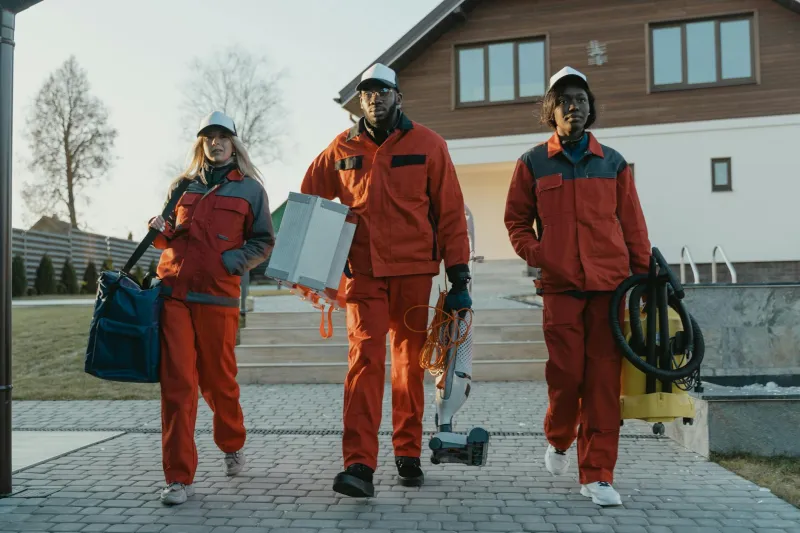
Patricia spent her last $500 on business registration paperwork and a used van. She called her company "Fresh Start Cleaning Services" and started with a simple premise: hire people others wouldn't, train them properly, and prove that second chances create first-class employees.
Building from the Margins
Patricia's first employee was Maria, a 47-year-old undocumented immigrant who spoke limited English. Her second was Jerome, recently released after a five-year prison sentence. Her third was Sandra, a recovering addict trying to rebuild her life.
None of them would have passed a traditional hiring process. All of them understood what it meant to need a real chance.
Patricia trained her team personally, teaching not just cleaning techniques but professional communication, time management, and customer service. She paid above minimum wage from day one, offered flexible schedules for single parents, and provided transportation for workers without cars.
Most importantly, she never asked about gaps in employment history. She focused on what people could do, not what they'd done wrong.
The Clients Who Took a Chance
Finding customers proved easier than expected. Small businesses, overwhelmed homeowners, and property managers didn't care about their cleaning crew's employment history—they cared about results.
Fresh Start's first major contract came from a local restaurant owner who'd also struggled to find steady work when he immigrated to America fifteen years earlier. He understood that desperate workers often became the most dedicated employees.
Word spread through communities that traditional businesses ignored. Churches recommended Fresh Start to members. Social workers referred clients who needed employment. Even some of the companies that had rejected Patricia began hiring her services.
Scaling the Second Chance
Within three years, Fresh Start had grown to thirty employees. Patricia added services: landscaping, moving assistance, basic home repairs. Each new division created opportunities for workers with different skills and backgrounds.
She partnered with local reentry programs, homeless shelters, and addiction recovery centers. Fresh Start became a pipeline for people transitioning back into society, offering not just jobs but career development.
Patricia instituted a promotion-from-within policy. Former employees became supervisors, then team leaders, then managers. Several started their own businesses using skills learned at Fresh Start.
The Irony of Success
Today, Fresh Start Cleaning Services employs over 300 people across three cities. Patricia owns the building where she once couldn't get hired as a receptionist. Companies that rejected her application now compete for her company's services.
The rejection letters still hang in her office, but now they're conversation starters rather than sources of pain. "Every 'no' taught me something about what the market really needed," she tells visitors.
Patricia's employees include former gang members, recovering addicts, single mothers, ex-felons, and immigrants. Their retention rate exceeds industry standards. Their customer satisfaction scores consistently rank in the top 10% locally.
The Economics of Inclusion
Fresh Start's model proved that hiring "risky" candidates actually reduces business risk. Workers who've faced real hardship rarely take stable employment for granted. People given genuine second chances tend to work harder than those who've never needed one.
Patricia's company now provides training and consulting services to other businesses wanting to implement inclusive hiring practices. She's spoken at conferences, advised city councils, and mentored dozens of entrepreneurs building similar ventures.
Beyond the Business Plan
Patricia Williams didn't set out to revolutionize hiring practices. She just wanted a job. But her systematic exclusion from traditional employment forced her to create something better—a company that proves America's "unemployable" population represents untapped potential, not inevitable liability.
Her story isn't about overcoming disadvantage; it's about transforming disadvantage into advantage. Every rejection letter became market research. Every barrier became a blueprint for inclusion.
In a economy that increasingly demands perfect resumes and seamless career progressions, Patricia built something different: a business that runs on second chances, powered by people who understand that opportunity isn't guaranteed—it's earned, one day at a time.