
The Sound of Everything Falling Apart
Picture this: You're at the top of your game, performing for emperors and aristocrats across Europe. Your symphonies fill concert halls, your piano sonatas drive audiences to tears. Then, slowly, the very thing that makes you who you are begins to slip away. Not your hands, not your mind—your ears.
For Ludwig van Beethoven, this nightmare became reality in his late twenties. The man who had revolutionized classical music was losing the one sense his entire world depended on. By 1802, at just 32 years old, he was contemplating suicide.
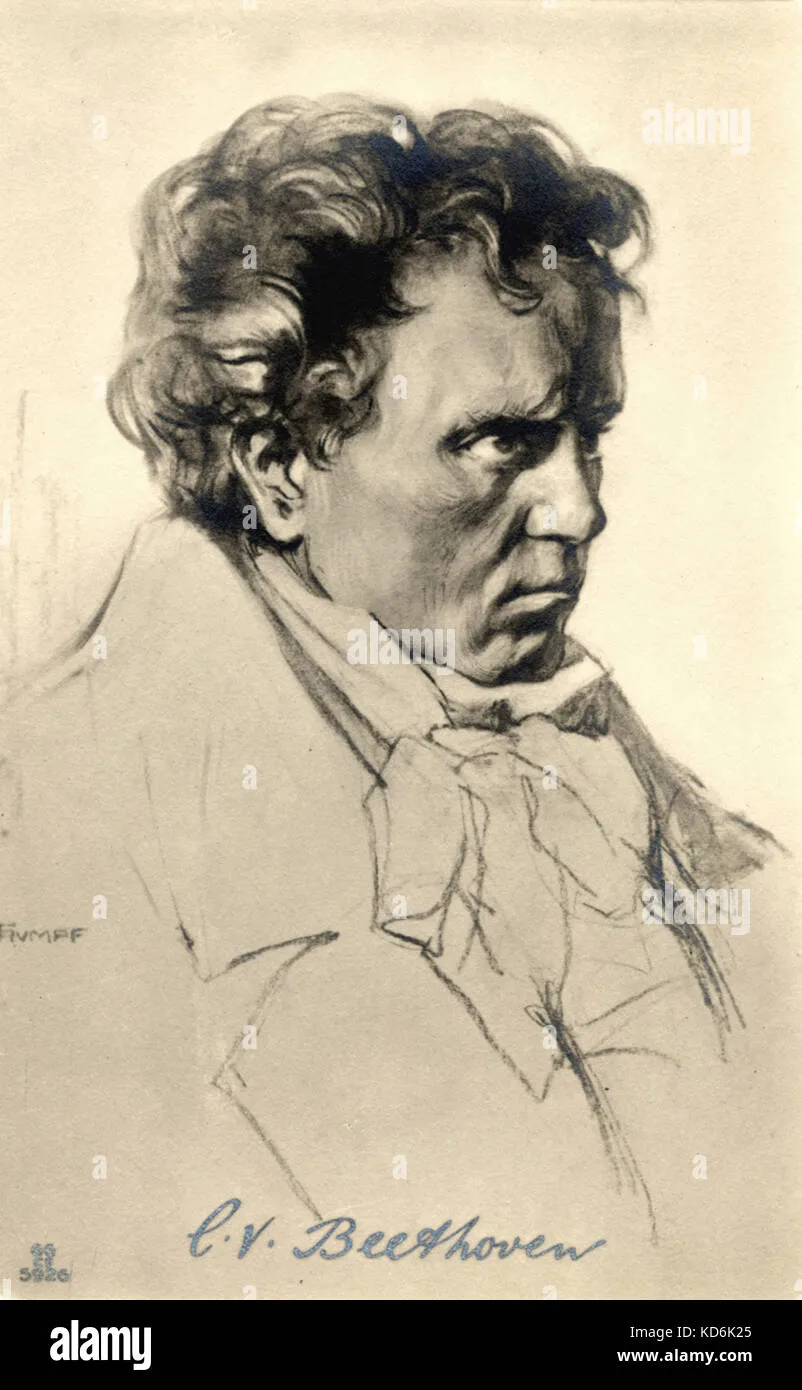 Photo: Ludwig van Beethoven, via c8.alamy.com
"I must live almost alone like one who has been banished," he wrote in what became known as the Heiligenstadt Testament, a letter to his brothers that he never sent. "If I approach near to people a hot terror seizes upon me and I fear being exposed to the danger that my condition might be noticed."
The Cruel Mathematics of Loss
The progression was merciless. First went the high notes—the delicate trills that danced above his melodies. Then conversations became a struggle. By his forties, Beethoven carried conversation books everywhere, forcing friends to write their words while he spoke his replies into an increasingly silent world.
Imagine conducting an orchestra when you can't hear if the violins are in tune. Picture composing a symphony when the only music exists in your memory and imagination. Most musicians would have surrendered to despair. Beethoven did something else entirely.
He learned to hear with his bones.
The Physics of Stubborn Genius
Beethoven discovered that sound travels through more than air. He would bite down on a wooden stick connected to his piano, feeling vibrations travel through his jaw to his skull. He pressed his ear against the instrument's frame, absorbing music through his skeleton rather than his eardrums.
But the real breakthrough wasn't mechanical—it was mental. Freed from the distractions of the outside world, Beethoven's internal musical landscape exploded with unprecedented complexity. His late works, composed in near-complete silence, are considered his greatest masterpieces.
When Limitation Becomes Liberation
The Ninth Symphony, with its triumphant "Ode to Joy," was written when Beethoven couldn't hear a whisper. The late string quartets, so complex they weren't fully understood until decades after his death, emerged from a mind that had learned to orchestrate entirely in silence.
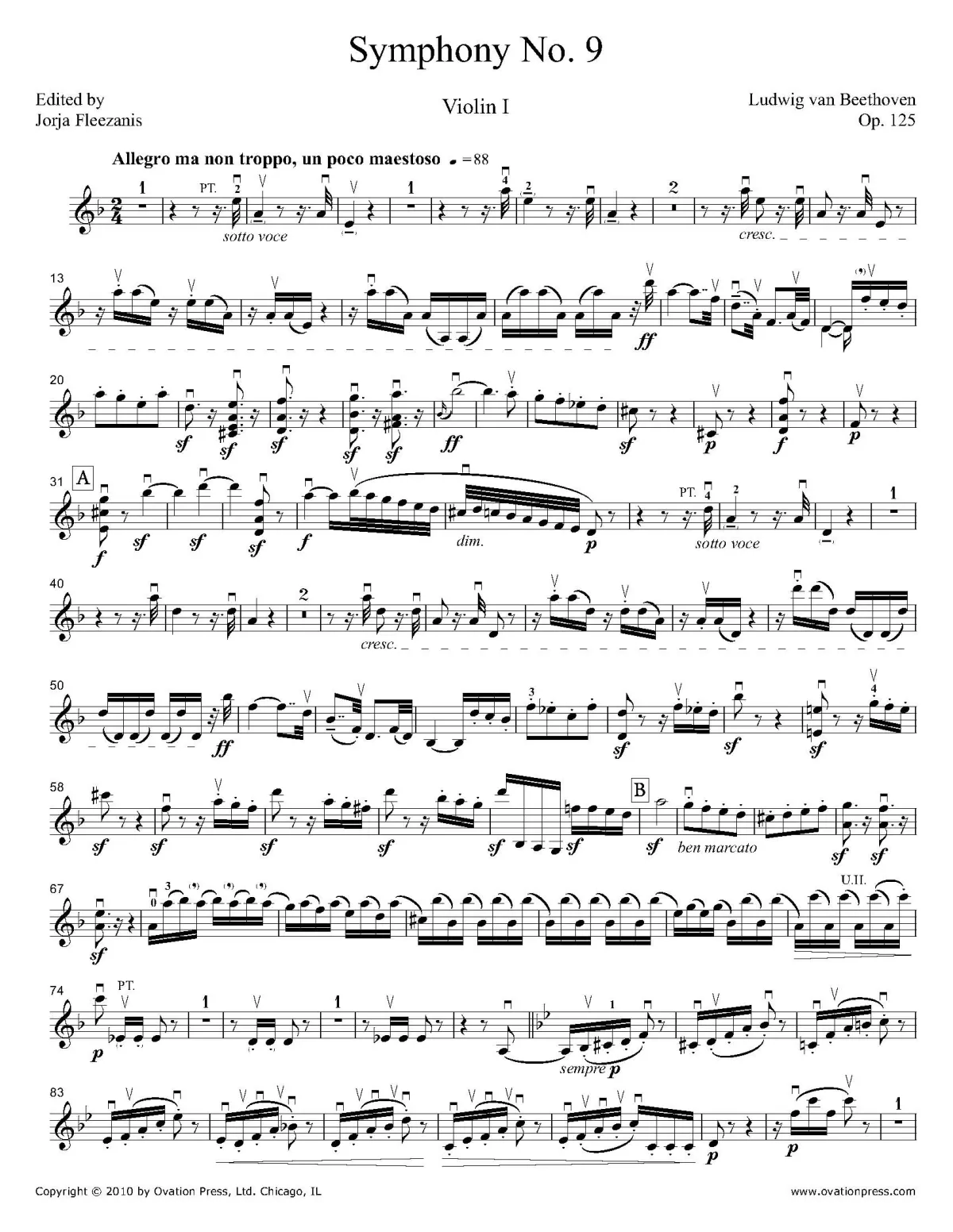 Photo: Ninth Symphony, via www.ovationpress.com
At the 1824 premiere of his Ninth Symphony, Beethoven stood on stage conducting an orchestra he couldn't hear. When the audience erupted in applause, he remained facing the musicians until a soloist turned him around to see the standing ovation he couldn't hear.
The Paradox of Perfect Hearing
Here's what makes Beethoven's story so remarkable: his deafness didn't diminish his music—it transformed it. Without the interference of external sounds, he could hear music as pure idea, unfiltered by the imperfections of performance or the limitations of instruments.
His late works show a composer who had moved beyond the physical act of hearing into something more profound—a direct connection between mind and musical truth. The man who lost his hearing became the composer who heard most clearly.
The Sound of Triumph
When Beethoven died in 1827, over 20,000 people attended his funeral in Vienna. They came to honor a man who had shown the world that our greatest limitations can become our most powerful tools—if we're stubborn enough to refuse defeat.
Today, whenever you hear the opening notes of the Fifth Symphony or the soaring melody of "Ode to Joy," you're hearing music born from silence. You're witnessing the sound of a man who learned that sometimes, losing everything is just another way of finding what truly matters.
Beethoven's deafness didn't end his story—it revealed its most beautiful chapter. In a world obsessed with what we lack, his life remains a thunderous reminder that our setbacks might just be our symphonies waiting to be written.