The Morning Everything Changed
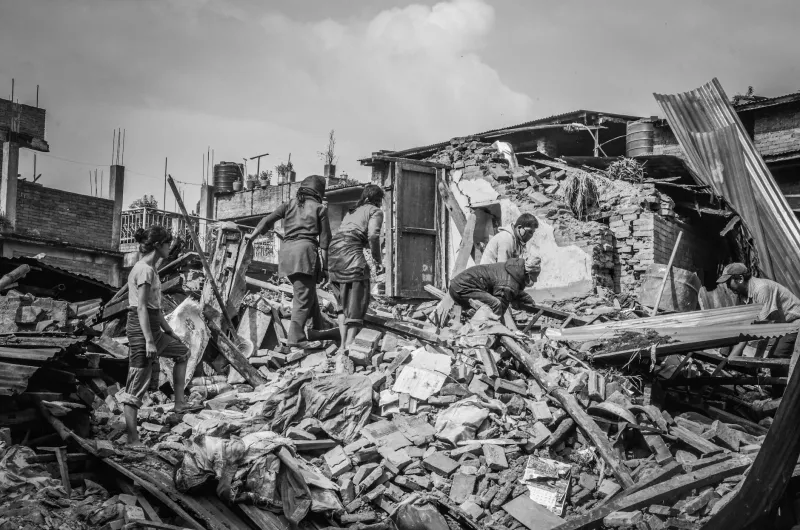
Maria Santos was brewing her morning coffee when the earth decided to rewrite her entire existence. The 6.9 earthquake that hit Northern California lasted ninety-seven seconds, but those seconds contained enough force to collapse her apartment building, empty her savings account, and crack open a version of herself she'd kept locked away for forty-three years.
Before that Tuesday morning in October, Maria had been the definition of careful. She'd worked the same accounting job for eighteen years, lived in the same rent-controlled apartment for twelve, and saved every penny with the methodical precision of someone who'd learned early that security came from staying small and staying quiet.
"I was terrified of everything," Maria recalls, sitting in the bustling headquarters of Resilient Communities Network, the organization she founded three years after the quake. "Terrified of taking risks, of speaking up in meetings, of anyone noticing me at all. I thought safety meant invisible."
The earthquake had other plans.
Starting Over From Less Than Zero
When the dust settled—literally—Maria found herself facing a reality that would have paralyzed the woman she used to be. Her apartment was condemned. Her car was crushed under debris. Her carefully hoarded savings were wiped out by medical bills from the injuries she sustained during the collapse. At forty-three, she was starting over from a position worse than zero.
But something unexpected happened in those first weeks of staying in emergency shelters and navigating FEMA paperwork. The woman who'd spent decades avoiding any situation where she might fail discovered she was remarkably good at crisis.
"I started helping other people figure out the insurance claims, the temporary housing applications, all of it," she explains. "And I realized I wasn't scared anymore. What was the worst that could happen? I was already living it."
The revelation was stunning in its simplicity: the catastrophe that had taken everything had also taken her fear.
The Accidental Organizer
Within six months, Maria had become the unofficial coordinator for her entire displaced community. She was the one people called when they couldn't navigate the bureaucracy, when they needed someone to advocate with landlords, when they felt lost in the maze of disaster recovery.
She'd never run anything bigger than her own quiet life, but suddenly she was organizing meetings, creating resource lists, and speaking at city council sessions. The woman who used to rehearse ordering coffee was now standing in front of crowds of hundreds, demanding better disaster preparedness for vulnerable communities.
"The old Maria would have died of embarrassment the first time I had to speak publicly," she laughs. "But the new Maria? She was furious. Furious that we'd been left so unprepared, that the systems were so broken, that people were suffering because no one was paying attention."
That fury became fuel.
Building What Should Have Been There
Two years after the earthquake, Maria took the settlement money from her destroyed apartment and did something that would have been unthinkable in her previous life: she started a business. Not just any business, but a nonprofit focused on building disaster resilience in low-income communities across the West Coast.
Resilient Communities Network now operates in California, Oregon, and Washington, working with local governments and community groups to create better emergency preparedness programs. They've helped over 15,000 families develop disaster plans, established emergency supply networks in forty-seven communities, and trained hundreds of local leaders.
The organization's approach is distinctly Maria's: practical, thorough, and built on the understanding that the people most likely to be forgotten in a crisis are often the ones who know best how to survive it.
The Paradox of Destruction
"People ask me if I wish the earthquake had never happened," Maria says, looking out at the team of twelve full-time employees she never imagined she'd have the courage to hire. "And I always say no. That earthquake saved my life."
It's a startling statement, but she means it literally. The Maria who existed before October 15th was slowly disappearing anyway, suffocating under the weight of her own caution. The earthquake didn't just destroy her apartment; it demolished the invisible prison she'd built around her own potential.
"I was so afraid of losing what I had that I never noticed I wasn't really living," she reflects. "Sometimes you have to lose everything to realize you never really had anything to begin with."
The Ripple Effect
Today, Resilient Communities Network is expanding into Texas and Florida, two states that know something about starting over after natural disasters. Maria speaks regularly at conferences about disaster preparedness, but also about something less tangible: the strange gift that can be found in life's worst moments.
"We tell people to prepare for disasters, but we never talk about preparing for the person you might become after one," she says. "Sometimes the most important thing that survives isn't your stuff—it's the you that you never knew was there."
The woman who once counted safety in savings accounts now measures it in community connections, in neighbors who know each other's names, in systems built to catch people when they fall. She's learned that real security doesn't come from avoiding risk—it comes from building something strong enough to survive whatever comes next.
The ground may shake again, but Maria Santos isn't afraid anymore. She's too busy helping others find their footing.