From Deportation Bus to Medal of Honor: The Farmworker Who Earned America's Highest Military Decoration
The Dawn Raid
José Martinez was picking strawberries in the pre-dawn darkness of California's Central Valley when the buses arrived. It was August 1953, and Operation Wetback was in full swing — the federal government's mass deportation campaign that would remove over one million people from the United States, regardless of their legal status or length of residence.
Martinez, sixteen and American-born, watched immigration officers round up workers without checking documents. When he tried to explain his citizenship, an officer shoved him toward the bus. "Save it for Mexico, kid," the man said.
Within hours, José Martinez was across the border in Tijuana, clutching a birth certificate that no one had bothered to examine. He had twenty-three dollars in his pocket and no idea how to get home to a country that had just rejected him.
Exile in His Grandfather's Land
Mexico should have felt familiar to Martinez. His grandparents had immigrated from Michoacán, and Spanish was his first language. But the teenager who'd grown up in Fresno's migrant camps felt like a foreigner in his ancestral homeland.
"I was too American for Mexico and apparently too Mexican for America," Martinez later recalled. He found work in Tijuana's factories, sending what little he could spare to his mother, who was frantically trying to prove her son's citizenship to immigration authorities.
For two years, Martinez lived in legal limbo. His birth certificate was authentic, but the bureaucratic machinery that had expelled him showed little interest in correcting its mistake. Letters to immigration officials went unanswered. Visits to the American consulate yielded only form letters explaining that his case was "under review."
The Recruiter's Promise
In 1955, a U.S. Army recruiter visited Tijuana's American consulate. Staff Sergeant William Chen was looking for Spanish-speaking recruits for the Korean conflict, and he noticed Martinez's name on a list of Americans seeking repatriation.
"Kid's got a birth certificate from Fresno and speaks perfect English," Chen noted in his report. "Why's he stuck down here?"
When Chen learned about Martinez's deportation, he saw an opportunity. The Army had authority to expedite citizenship cases for military recruits. Martinez's American birth certificate, combined with military service, could cut through the immigration bureaucracy that had ignored him for two years.
"You want to get home?" Chen asked Martinez. "Uncle Sam's got a job for you."
From Deportee to Soldier
Martinez enlisted at the American consulate in Tijuana on March 15, 1955. Within a week, he was back on American soil for the first time since his deportation. The irony wasn't lost on him — the same government that had forced him out was now welcoming him back, as long as he was willing to risk his life for it.
Basic training at Fort Benning revealed that Martinez's years in the fields had prepared him well for military discipline. He was used to long hours, physical hardship, and taking orders from people who didn't always treat him with respect. The Army, despite its flaws, was actually more meritocratic than the agricultural system he'd grown up in.
 Photo: Fort Benning, via static.wixstatic.com
"In the fields, you were always just another pair of hands," Martinez remembered. "In the Army, they at least bothered to learn your name."
The Hill That Changed Everything
Martinez arrived in Korea in September 1955, assigned to the 2nd Infantry Division as a machine gunner. The war was winding down, but sporadic fighting continued along the demilitarized zone.
On November 12, 1955, Martinez's unit was defending Hill 347 when Chinese forces launched a surprise assault. The attack came at dawn, overwhelming the American positions with superior numbers and forcing a retreat that left Martinez's machine gun crew isolated.
With his squad leader wounded and enemy forces advancing on three sides, Martinez made a decision that would define his life. Instead of retreating with the rest of his unit, he stayed behind to provide covering fire, allowing his wounded comrades to reach safety.
Alone on the Hill
For six hours, Martinez held Hill 347 by himself. Using captured Chinese ammunition when his own ran out, he repelled three separate assaults while calling in artillery strikes on his own position. Radio transcripts from that day capture his calm professionalism under impossible circumstances.
"This is Martinez. I count thirty, maybe forty hostiles moving up the south slope. Requesting fire mission on my position. Yes sir, I said on my position. I'm dug in pretty good."
When American forces finally retook the hill, they found Martinez unconscious from blood loss, surrounded by evidence of his six-hour battle. His actions had prevented a Chinese breakthrough that could have cost hundreds of American lives.
The Medal and the Irony
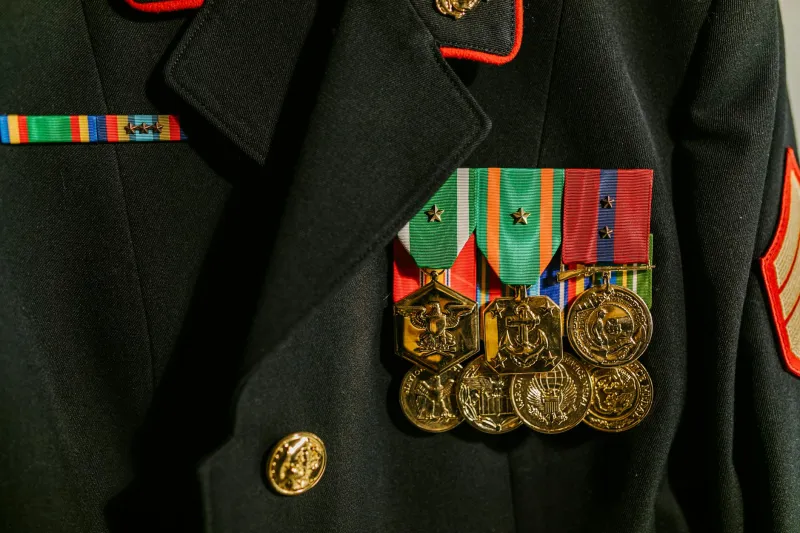
On June 21, 1956, President Eisenhower presented José Martinez with the Medal of Honor in a White House ceremony. The citation praised his "conspicuous gallantry and intrepidity at the risk of his life above and beyond the call of duty."
The irony of the moment wasn't lost on anyone present. Three years earlier, the same administration had deported Martinez as an undesirable alien. Now they were honoring him as an American hero.
"This medal belongs to everyone who's ever been told they don't belong here," Martinez said in his brief acceptance speech. "Sometimes you have to prove your worth in ways you never imagined."
The Complicated Homecoming
Martinez returned to California as a decorated war hero, but the welcome was more complex than the medal ceremony suggested. The same Central Valley communities that had watched him get deported now celebrated him as a local hero, though the farmworkers who'd shared those deportation buses remained largely invisible.
He used his military benefits to attend college, becoming a teacher and later a principal in the same school district where he'd been a student before his deportation. For forty years, Martinez worked to ensure that other immigrant children received the education he'd almost been denied.
Legacy of Service
Martinez rarely spoke publicly about his military service, preferring to focus on his work in education. But his story became a powerful symbol for Latino veterans and immigrant rights advocates, illustrating the complex relationship between military service and American identity.
"José proved something important about who gets to be American," noted historian Dr. Maria Santos. "It's not about where you're born or what language you speak first. It's about what you're willing to sacrifice for the idea of America."
The Question That Remains
José Martinez died in 2018, taking with him the quiet dignity that had defined his response to both rejection and recognition. His Medal of Honor sits in the Smithsonian, but his real legacy lives in the thousands of students he taught and the example he set.
His story poses uncomfortable questions about American identity that remain relevant today. How does a nation deport someone one day and honor them as a hero the next? What does it mean to serve a country that doesn't always recognize your right to belong?
Martinez never claimed to have easy answers. He simply lived his life as proof that American heroism comes in many forms, speaks many languages, and sometimes emerges from the most unlikely circumstances.
The boy who was forced onto a deportation bus became the man who held a hill alone against impossible odds. In between those moments lies a story about the complexity of belonging, the price of recognition, and the many ways Americans prove their worth to a nation that doesn't always know how to value them.