Five Debts, One Bus Ticket, and the Store That Outlived Every 'No' in Town
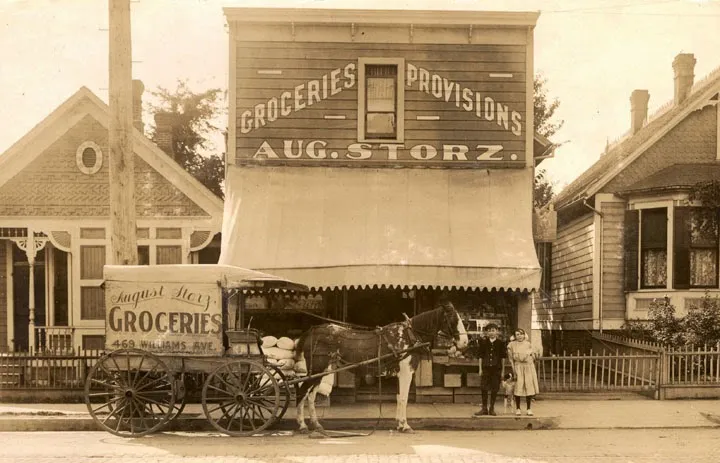
Photo: vintage immigrant storefront small shop, early 1900s America, via blogger.googleusercontent.com
The Arithmetic of Starting With Nothing
Some immigrants arrive in America with savings. This man arrived with a ledger of debts — money owed to five different people back home who had pooled everything to buy him a bus ticket. That's not a safety net. That's a weight.
And the town he landed in made sure the weight got heavier. Every bank said no to a loan. Every employer had a reason to say no to a hire. Language barriers, no credit history, no collateral, no connections. Rejection, in his case, wasn't a single event. It was the weather.
One Room, One Idea
So he did the only thing left: he stopped asking for permission. He rented — somehow — a single room and began selling goods directly to the neighbors who had also said no to him, or at least hadn't helped. Long hours, thin margins, everything carried by hand.
What the banks saw as a bad risk, customers saw as something else: a shopkeeper with a personal stake in every transaction. When your name is on the door and five creditors are watching from across an ocean, you don't cut corners. Word traveled. The single room became two. Then a storefront. Then, decades later, a chain that families across the region shopped at without ever knowing how it started.
The companies that rejected him? Most didn't survive long enough to see his name on the marquee.
He Wasn't the Only One
His story rhymes with a pattern you can trace all through American business. Consider a few others who started from below zero:
The founder who sold oranges from a wagon. Arriving with no English and no capital, he built a grocery empire one street corner at a time — and famously credited the wagon, not despite it, for teaching him his customers' names.
The seamstress who turned a rejected patent into a house. Told her design was unmarketable, she sold dresses out of her apartment until the very buyers who'd passed came back as customers.
** The diner cook who mortgaged the only thing he owned.** Turned down for a business loan, he borrowed against his car instead — a bet that looks insane in hindsight and looked like hunger at the time.
The teenager who sold newspapers before dawn. Denied jobs because of his age, he built a distribution route that became a wholesale business before he could legally sign the leases.
The Pattern Hiding in the Rejections
Look at these stories side by side and something counterintuitive appears: the rejections weren't obstacles to the success. They were the blueprint.
- Banks saying no meant these founders learned to run lean from day one — no debt trap, no outside masters.
- Employers saying no meant they built customer relationships instead of résumés.
- Being outsiders meant they served customers the established players ignored.
Every refusal forced a workaround, and every workaround became a competency the competition couldn't buy.
What the Bus Ticket Was Really Worth
Five people back home bet everything on a man the American banking system wouldn't give a dollar. He repaid the debts, every one, and then kept building — because the obligation didn't end when the money did.
The store chain he founded is the visible legacy. But the real story is the conversion rate: every no in that town eventually turned into a customer, a lease, or a lesson. He didn't out-argue the rejection. He outlasted it.
And that might be the most American sentence in this whole story — not the rags-to-riches part, but the part where the people who said no had to watch.