One Handwritten Letter, One Landmark Ruling: The Drifter Who Rewrote Your Rights

Most landmark legal cases begin with a team. Lawyers in expensive suits, civil rights organizations with strategy documents, advocacy groups with long institutional memories and longer donor lists. The machinery of legal change, when it works, tends to be well-funded and well-organized.
Gideon v. Wainwright had none of that at the start. What it had was a fifty-one-year-old drifter, a pencil, and a stack of prison stationery.
That turned out to be enough.
The Man the System Had Given Up On
Clarence Earl Gideon was not, by any conventional measure, the person you'd expect to reshape American constitutional law. He'd been in and out of trouble since adolescence, bouncing through the margins of mid-century America with a sixth-grade education and a series of petty crimes that kept landing him back in front of judges. By the time he arrived in Florida in the early 1960s, he was a familiar type to the courts: broke, unrepresented, and easy to process.
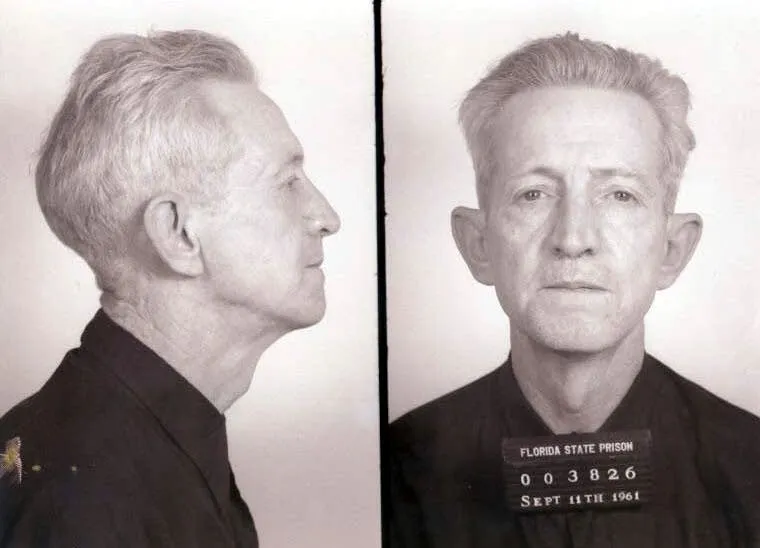 Photo: Clarence Earl Gideon, via img.apmcdn.org
In August 1961, he was charged with breaking and entering a pool hall in Panama City, Florida — a felony. He stood before the court and asked for a lawyer to be appointed to represent him. He didn't have money to hire one himself. The judge told him no. Florida law at the time only provided appointed counsel in capital cases — cases where a defendant faced the death penalty. Gideon was facing prison, not execution, so he was on his own.
He represented himself. He lost. He was sentenced to five years in the Florida State Prison.
 Photo: Florida State Prison, via theprisondirect.com
A lot of people in that position would have served the time and moved on. Gideon started reading.
The Education That Happened in a Cell
Prison libraries in the early 1960s weren't exactly well-stocked, but they had law books. Gideon read them. He read about the Constitution, about due process, about the Sixth Amendment's guarantee of the right to counsel. He read about a 1942 Supreme Court case called Betts v. Brady, which had held that the right to appointed counsel in state criminal cases was not an absolute federal requirement — that states could decide for themselves when a defendant truly needed a lawyer.
Gideon thought Betts was wrong. He thought the system that had processed him without legal representation was wrong. And in January 1962, he sat down and wrote a petition to the United States Supreme Court in pencil, on lined prison paper, asking the justices to hear his case.
The petition was imperfect. The legal reasoning was untrained, the language unpolished. But the core argument was sound: a man who cannot afford a lawyer and faces imprisonment is not receiving a fair trial. The Sixth Amendment means what it says. The Constitution applies to everyone.
The Supreme Court agreed to hear it.
What Happened Next
The Court appointed Abe Fortas — one of Washington's most respected attorneys, who would later become a Supreme Court Justice himself — to argue Gideon's case. The case was heard in January 1963. On March 18, 1963, the Court issued a unanimous ruling.
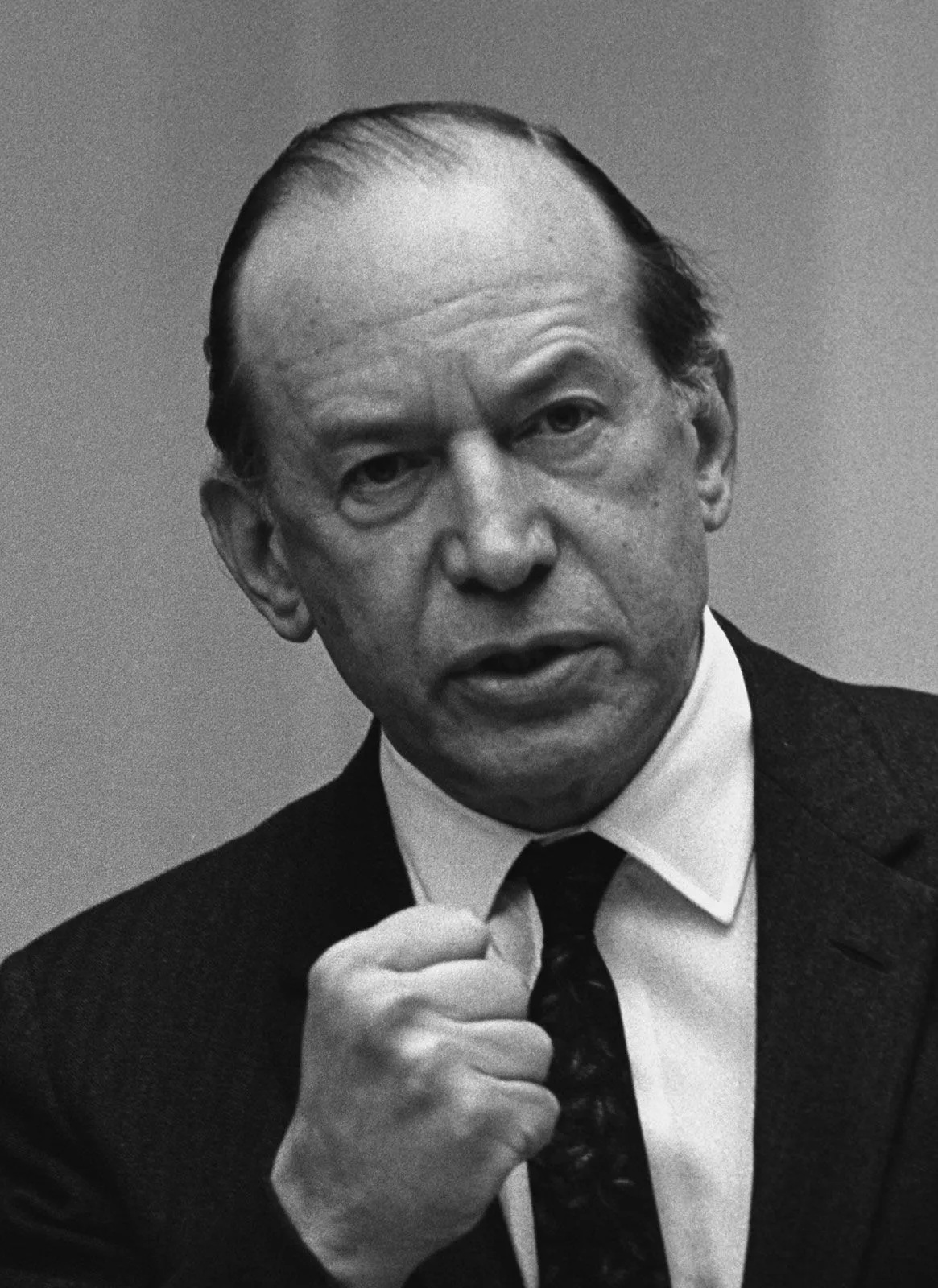 Photo: Abe Fortas, via cdn.britannica.com
Betts v. Brady was overturned. The Sixth Amendment right to counsel, the Court held, was a fundamental right that applied to state criminal proceedings through the Fourteenth Amendment. Any person charged with a felony who could not afford an attorney had the constitutional right to have one appointed. No exceptions.
Justice Hugo Black, writing for the Court, put it plainly: "Lawyers in criminal courts are necessities, not luxuries."
The ruling required Florida to retry Gideon. This time, with a lawyer defending him, he was acquitted in under an hour.
The Ripple That Became a Wave
The immediate practical impact of Gideon v. Wainwright was staggering. States across the country had to release or retry thousands of prisoners who had been convicted without legal representation. Public defender systems — which existed in some form in some places but were far from universal — had to be built, funded, and staffed at scale. The architecture of the American criminal justice system shifted, fundamentally, because one man in a Florida prison cell decided the system had gotten it wrong and said so.
Author Anthony Lewis chronicled the case in his 1964 book Gideon's Trumpet, which remains one of the most readable accounts of how constitutional change actually happens. Lewis's portrait of Gideon is careful not to romanticize him — he was a complicated man with a complicated history — but it makes clear that the rightness of his argument was independent of the messiness of his life.
That's the part of this story that resonates most. Gideon didn't become a legal scholar. He didn't go on to a distinguished career in public service. He remained, in many ways, the same man he'd always been. But the idea he carried into that prison — the simple, stubborn conviction that the Constitution meant what it said — was correct. And he found a way to make the highest court in the land hear it.
What a Pencil and Prison Stationery Can Do
There's a temptation, when telling this story, to frame it as a triumph of the individual over the system. That's partly true. But it's also a story about what happens when a system is forced to confront its own stated values.
America had written the right to a fair trial into its founding documents. It had just been sloppy about enforcing it for people who couldn't pay. Gideon didn't create a new right. He demanded that an existing one be honored.
He did it with a pencil, on prison stationery, with a sixth-grade education and nothing to lose.
If you're ever told that you don't have the standing, the credentials, or the resources to challenge something that's genuinely wrong — remember what Clarence Earl Gideon managed to do from a Florida prison cell in 1962. He didn't wait for permission. He wrote the letter.