Twice Rejected, Then Unstoppable: The Woman Who Built America's Disaster Playbook From the Outside In
Photo: United Civic and Veterans Association, Public domain, via Wikimedia Commons
The Second Rejection
The first time Clara Whitmore was asked to leave nursing school, she told herself it was a mistake — a clerical mix-up, a personality conflict with a supervisor, something that could be appealed or explained away. The second time, she had to sit with a harder truth: the institution had made its decision, and it was not going to change its mind.
 Photo: Clara Whitmore, via i.ytimg.com
This was the mid-1950s, in a mid-sized Midwestern city where the options available to an ambitious woman without formal credentials were narrow enough to feel like walls. Whitmore had grown up watching her mother manage the informal health crises of an entire neighborhood — the burns, the broken bones, the difficult births, the emergencies that couldn't wait for a doctor who might or might not arrive in time. She had come to nursing school with the belief that formal training would give structure and reach to something she already understood in her bones.
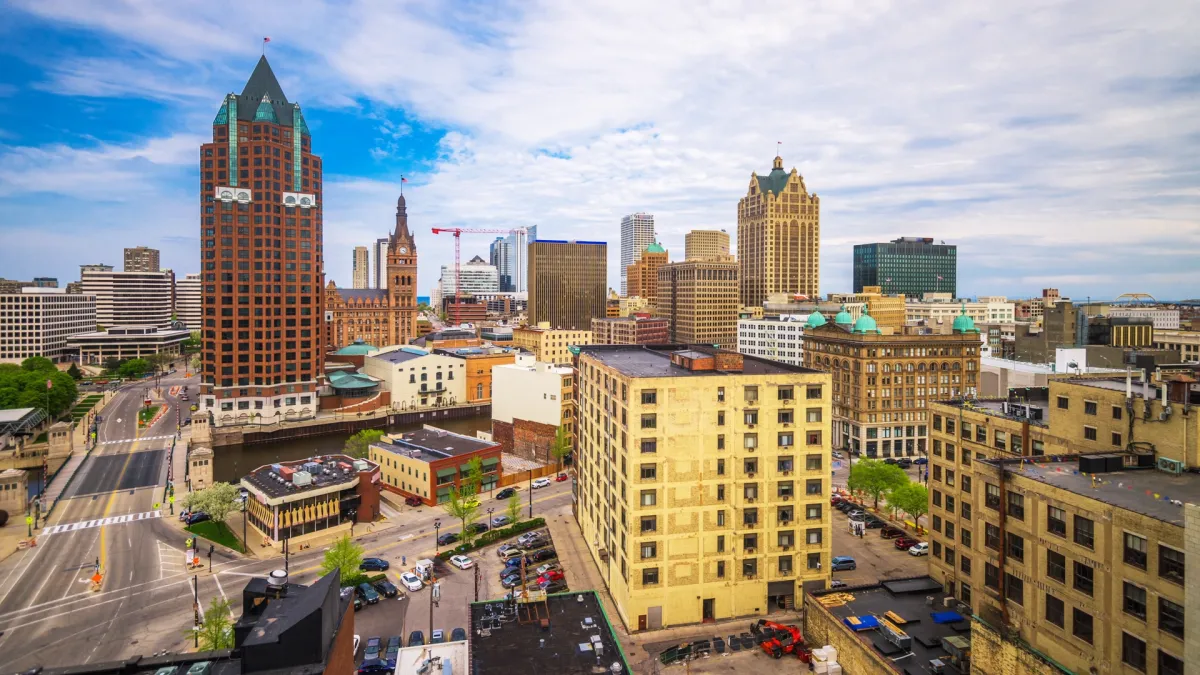 Photo: Midwestern city, via media.nbcchicago.com
Instead, she came out of it with two rejection letters and a fury that, for a while, had nowhere to go.
The Problem She Couldn't Stop Seeing
What Whitmore did with that fury was not immediately obvious, even to her. She spent several months working in a laundry, then as a bookkeeper for a small hardware store, carrying around a resentment she didn't yet know how to use.
The thing that redirected her was a flood.
In the spring of 1957, heavy rains overwhelmed the drainage infrastructure of her neighborhood, and a low-lying residential area flooded badly enough that several families had to be evacuated. What Whitmore observed during those forty-eight hours changed the direction of her life. She watched the official response — well-intentioned, chaotic, and chronically behind the reality on the ground — and she watched the unofficial response: neighbors who knew which elderly residents couldn't manage the stairs, who knew which families had infants, who knew where the medical supplies were kept and who had a truck and who spoke enough Spanish to communicate with the families on the east side of the block.
The official system had resources. The community had knowledge. The two were almost entirely disconnected from each other, and people fell into the gap between them.
Whitmore, who had just spent years being told she didn't understand how the system worked, suddenly understood exactly what the system was missing.
Building Without a Blueprint
She started small, the way most things that eventually become large tend to start. She organized a neighborhood meeting — not to protest, not to petition, but to map. She wanted to know who in the community had medical training of any kind, who had vehicles, who had storage space, who spoke languages other than English, who had physical limitations that would make evacuation difficult, who had the kind of calm temperament that holds up under pressure.
What she was building, without the vocabulary to name it yet, was a community-based emergency response network. It was informal, underfunded, and run almost entirely on the organizational energy of people who had never been asked to do anything like this before.
It was also, in retrospect, decades ahead of its time.
The protocols she developed were not borrowed from institutional emergency management manuals, because she didn't have access to those manuals. They came instead from direct observation of what went wrong during real events and from a relentless willingness to revise. When something didn't work, she changed it. When a neighbor suggested a better approach, she adopted it. There was no institutional inertia to overcome, because there was no institution — just a woman with a legal pad and a very clear memory of what chaos looked like when no one was prepared for it.
When the Establishment Finally Came Knocking
It took years for the formal emergency management world to take notice, and the notice, when it came, was not immediately respectful. A county official who attended one of Whitmore's community preparedness sessions in the early 1960s reportedly described her operation as "well-meaning amateur work" in a memo that somehow made its way back to her.
She framed it and hung it on her wall.
By the late 1960s, the framing had shifted. A series of disasters — floods, industrial accidents, a particularly devastating winter storm — had exposed the same gaps in the official response system that Whitmore had been documenting and addressing for more than a decade. Researchers from two universities began studying her network. A federal agency sent observers. The vocabulary she had invented out of necessity — community liaison coordinators, pre-positioned supply caches, language-access protocols — started appearing in official documents under different names.
The acknowledgment of her specific contribution was incomplete, the way these acknowledgments often are when the original work was done by someone outside the credentialed class. But the influence was real and traceable, and the people who worked alongside her knew exactly where the ideas had come from.
The Outsider Advantage
The most important thing about Whitmore's story is not that she succeeded despite being rejected. It is that the rejection, as painful as it was, gave her something the institution could not have given her: a completely unobstructed view of what the institution was getting wrong.
People inside systems are, almost by definition, shaped by those systems. They learn to see problems through the frameworks their training provides, and those frameworks are genuinely useful — but they also have blind spots built into them, assumptions so deeply embedded that they become invisible. The institutional emergency management of the 1950s and 1960s was built around resources and hierarchies and official channels, and it consistently underestimated the knowledge and capacity that existed at the community level, because that knowledge didn't show up in any of its official categories.
Whitmore saw it because she had never been trained not to.
That is the strange gift of the outsider position — not that it makes things easier, but that it removes certain filters. You see what is actually there rather than what your training tells you should be there.
What She Left Behind
Clara Whitmore never got the nursing credentials she originally pursued. She also never stopped doing the work that those credentials were supposed to authorize. By the time she retired in the early 1980s, the network she had built had been replicated in dozens of communities across several states, and elements of her approach had been absorbed into national emergency preparedness frameworks.
She gave a speech at a community event late in her life in which she thanked the nursing school that had rejected her twice. The audience laughed, assuming she was being wry. She insisted she was being sincere.
"They told me I didn't fit," she said. "They were right. I didn't fit inside the building. I fit out here."
She gestured at the neighborhood around her — the streets, the houses, the people — and left it at that.