What His Hands Knew That His Eyes Never Could: The Appraiser Who Became Art's Greatest Detective After Going Blind
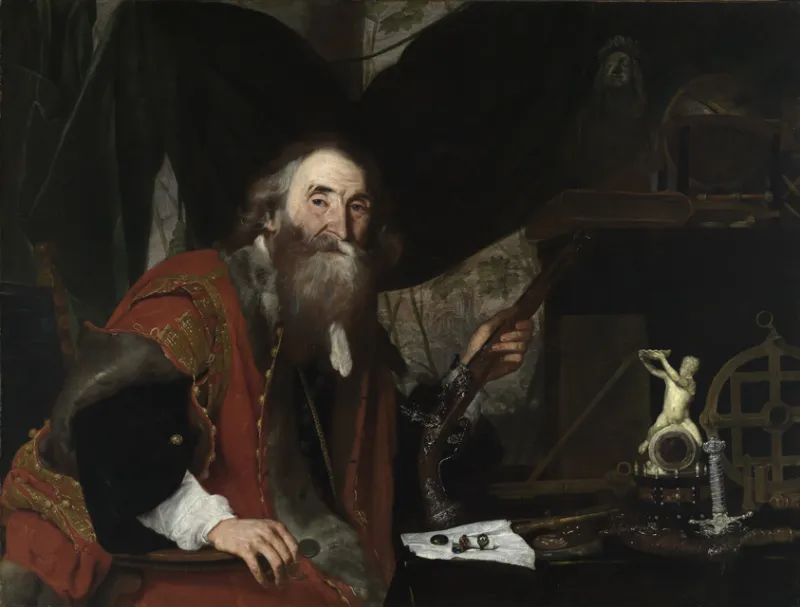
Photo: Jan de Herdt, Public domain, via Wikimedia Commons
The Day the Lights Went Out
James Elroy Calder had spent twenty years in some of the most prestigious auction rooms on the Eastern Seaboard. He knew how to read a room, how to read a canvas, and how to read the subtle tells of a forger trying to pass off a copy as a Flemish original. He had built his reputation on his eyes — on the almost eerie precision with which he could glance at a painting and know, within seconds, whether it belonged in a museum or a dumpster.
So when a degenerative retinal condition began stealing his vision in his mid-forties, the assumption among his colleagues was straightforward: his career was over. You can't authenticate what you can't see. The auction world is a visual business, built on surfaces and light and the trained gaze of people who have spent decades learning to look.
Calder had a different theory.
Learning to Read All Over Again
The first thing most people notice when they lose a dominant sense is the chaos — the disorientation, the grief, the terrifying sense that the world has become a place you no longer know how to navigate. Calder went through all of that. He has never pretended otherwise. But somewhere inside that chaos, something else began to happen.
With nothing to look at, he started to listen differently. He started to touch differently. He would run his fingertips across the surface of a canvas and feel things he had never registered before — the way old paint cracks in a pattern that no forger has ever successfully replicated, the slight give of linen that has aged for three hundred years versus linen that was primed last decade, the almost imperceptible texture of genuine impasto laid down by a hand working in real time against a surface it could not fully control.
He began memorizing provenance records in extraordinary detail, not just the broad strokes but the granular specifics — the shipping records, the estate inventories, the auction catalog descriptions going back to the seventeenth century. Without a visual shortcut to fall back on, he built a different kind of architecture in his mind. One that was slower to construct and nearly impossible to fool.
"Sighted people learn to trust the first impression," he once explained to a colleague. "I had to learn to distrust it entirely. Everything I know now, I had to earn twice."
The Case That Changed Everything
The turning point came about four years after his diagnosis, when a disputed Rembrandt attribution landed on the desks of three of the country's most respected art historians. The painting had surfaced at an estate sale in Connecticut, acquired cheaply by a buyer who suspected it might be something extraordinary. Two experts declared it a seventeenth-century copy of reasonable quality. One declared it the real thing. The disagreement threatened to derail an auction that could have generated millions of dollars and attracted international attention.
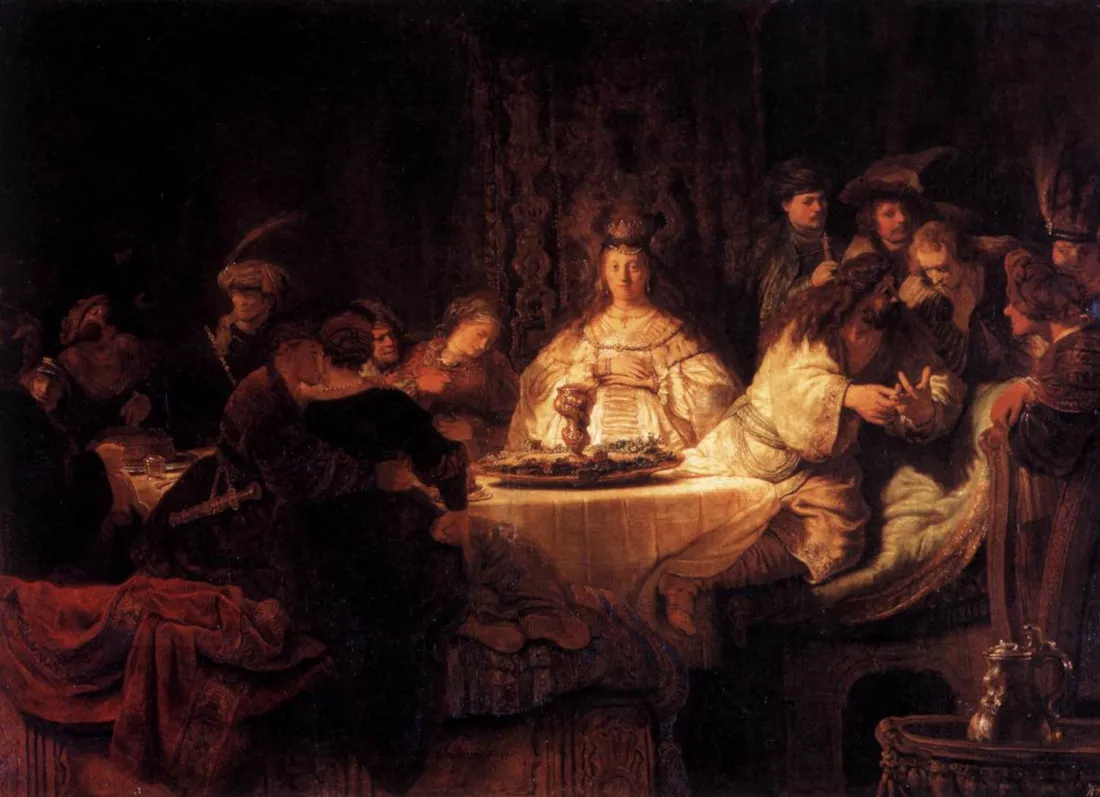 Photo: Rembrandt, via static.artbible.info
Calder was brought in almost as an afterthought — a courtesy, his colleagues later admitted, more than a genuine consultation. What happened next became something of a legend in the trade.
He spent forty minutes with the painting. He did not ask for it to be described to him. He touched the frame, traced the edges of the canvas where it wrapped around the stretcher bars, pressed the back of his hand gently against the surface to feel the temperature differential between the paint layers and the ground beneath. He asked for the provenance file to be read aloud, stopping the reader three times to ask for clarification on specific details.
Then he said it was genuine — and he explained exactly why, in language so specific and so technically grounded that the room went quiet.
Subsequent scientific testing confirmed his assessment. The painting sold for a figure that made the front page of the arts section.
What the Conventional Path Misses
There is something important in Calder's story that goes beyond the inspiring headline. It is not simply that he adapted. It is that the adaptation forced him to become something the conventional path never produces — a specialist whose knowledge had no visual shortcuts built into it.
Most experts in any field develop efficient heuristics over time. They learn to trust their first read, their gut, the fast pattern-matching that experience generates. That efficiency is genuinely valuable. It is also genuinely vulnerable. Forgers study the same heuristics that experts rely on. They know what a trained eye looks for, and they exploit the gaps.
Calder had no fast pattern-matching left. Every assessment required him to go deep rather than fast. And in going deep, he built an understanding of craftsmanship, materials, and provenance that operated at a level most of his sighted colleagues had never needed to reach.
He became, in other words, exactly the kind of expert that the people who dismissed him had never thought to become.
The Ripple Effect
Calder's methods did not stay confined to his own practice. The protocols he developed — the systematic tactile examination, the rigorous cross-referencing of provenance records against material evidence, the deliberate slowing-down of the authentication process — began to influence how the broader field approached disputed works.
Several major institutions now incorporate elements of his approach into their standard authentication procedures, not because those institutions are staffed by blind experts, but because his work demonstrated the limits of visual inspection alone and made a compelling case for a more layered methodology.
He never set out to reform an industry. He was just trying to keep doing the work he loved after the thing he had relied on most was taken away.
What Limitation Actually Costs You
It would be dishonest to frame Calder's story as a simple triumph. He lost something real and irreplaceable. There are works of art he will never see, colors he can no longer perceive, the specific visual pleasure of standing in front of a great painting and letting it wash over you — all of that is genuinely gone, and he has never pretended otherwise.
But what replaced it is not nothing. What replaced it is a form of expertise that took a different kind of courage to build, because it required him to start over in the middle of a career he had already mastered. To be a beginner again when the world expected him to be a veteran. To sit with confusion and uncertainty long enough to find something on the other side.
That is the part of his story that tends to get lost in the headline version — the version where a blind man outsmarts the experts and everyone applauds. The real version is quieter and harder: a man who decided, in a moment of genuine loss, that the loss was not the last word.
It never is.