When Sight Failed, Vision Soared: The Woman Who Photographed America's Soul Without Seeing It
The Moment Everything Went Dark
Evelyn Cameron was adjusting her camera lens on a crisp Montana morning in 1952 when the world simply vanished. Not gradually, as her doctors had warned might happen. Not with the mercy of twilight dimming to dusk. One moment she was framing a weathered rancher against the endless prairie sky, and the next, she was drowning in absolute darkness.
 Photo: Evelyn Cameron, via dynamic-media-cdn.tripadvisor.com
Most photographers would have packed away their cameras that day. Cameron unpacked hers and got back to work.
Learning to See Without Eyes
The woman who would revolutionize documentary photography didn't start with grand ambitions about changing the medium. She started with fury. Fury at the sudden blindness that doctors attributed to a rare autoimmune condition. Fury at well-meaning friends who suggested she take up pottery or basket weaving. And especially fury at the photography world's immediate assumption that her career was over.
"They acted like I'd lost my hands, not my eyes," Cameron later told an interviewer. "But photography was never about what I could see. It was about what I could feel."
That feeling would become her revolutionary method. Cameron developed what she called "proximity portraiture" — a technique that required her to get close enough to her subjects to sense their breathing, their tension, their unguarded moments. She learned to read the subtle shifts in posture that preceded a genuine smile, the way shoulders dropped when someone finally relaxed.
The Accidental Revolution
What Cameron discovered by necessity, sighted photographers had been missing by choice. Her portraits from the 1950s and 60s capture something that studio photographers with perfect vision consistently failed to achieve: absolute authenticity.
Without the distraction of visual cues, Cameron heard things other photographers missed. The catch in a voice that revealed old heartbreak. The rhythm of breathing that betrayed nervousness. The tiny sounds that indicated when someone had finally forgotten about the camera.
"I could tell you exactly when someone stopped performing for the lens," she explained years later. "It had a sound. A settling. That's when I knew to press the shutter."
Her technique was painstakingly methodical. She would spend hours with each subject, often sharing meals or helping with daily tasks before ever touching her camera. By the time she began shooting, her subjects had forgotten they were being photographed by someone who couldn't see them.
The Pictures That Changed Everything
Cameron's breakthrough came in 1957 with a series documenting migrant farmworkers in California's Central Valley. The images — raw, intimate, unflinchingly honest — caused an immediate sensation when they appeared in LIFE magazine. Critics struggled to explain how a blind photographer had captured expressions and moments that seemed impossible to plan or stage.
 Photo: California's Central Valley, via i.pinimg.com
The secret wasn't mystical. It was practical. Cameron had eliminated every shortcut that sighted photographers relied on. She couldn't judge her subjects by their appearance, couldn't make assumptions based on their clothing or posture. She had to earn every single frame through genuine connection.
"Sighted photographers often shoot from a distance, both literally and emotionally," noted photography historian Martha Chen. "Cameron had to get close. She had to care. And somehow, that intimacy translated directly into her images."
Recognition and Resistance
The photography establishment didn't know what to do with Cameron. Her success challenged fundamental assumptions about their craft. How could someone who couldn't see produce images that were more visually compelling than work by photographers with perfect vision?
Some critics dismissed her success as novelty, suggesting that her blindness was a gimmick that earned sympathy rather than respect. Cameron's response was typically direct: she entered her work in competitions under a pseudonym. When those anonymous submissions consistently won top prizes, the criticism quieted.
By 1965, Cameron's work was hanging in galleries from New York to Los Angeles. Museums that had initially hesitated to exhibit photographs by a blind artist were now competing to acquire her prints.
The Method Behind the Magic
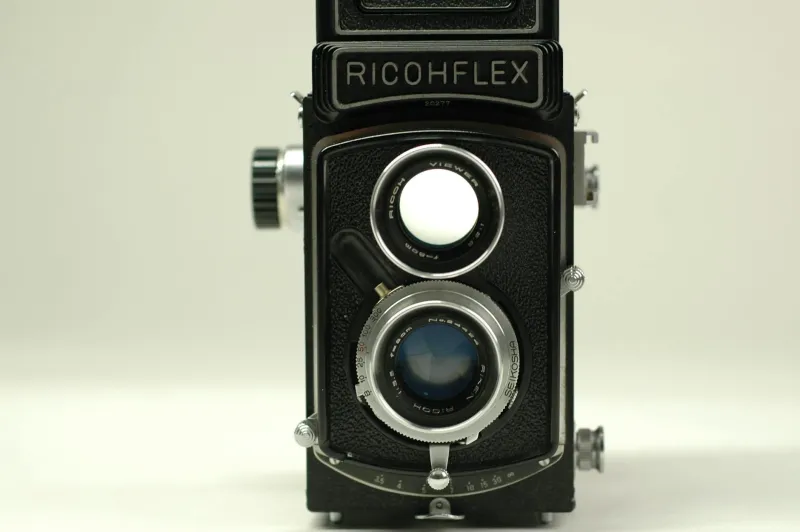
Cameron's technical innovations were as revolutionary as her artistic approach. Working with camera manufacturers, she developed tactile modifications that allowed her to feel exposure settings and focus distances. She created a system of raised dots and textured surfaces that functioned like Braille for photographers.
But the real innovation was philosophical. Cameron proved that photography's power lay not in the photographer's ability to see, but in their capacity to understand their subjects deeply enough to capture truth.
"Most photographers are tourists in other people's lives," Cameron once observed. "I had to become a temporary resident."
Legacy in Focus
Evelyn Cameron continued photographing until her death in 1989, producing over 50,000 images that documented four decades of American life. Her archive, now housed at the Smithsonian, represents one of the most comprehensive visual records of mid-century rural America.
More importantly, Cameron's approach influenced generations of photographers who learned to prioritize connection over technique, patience over speed. Photography schools now teach courses based on her methods, training sighted students to work blindfolded to develop the same intimate awareness Cameron cultivated by necessity.
Seeing the Invisible
Cameron's story reveals something profound about both photography and perception. She discovered that sight could actually be a limitation — that eyes often see only surfaces while other senses penetrate deeper truths.
Her greatest achievement wasn't overcoming her blindness to become a photographer. It was using her blindness to become a better photographer than those who could see perfectly.
In a medium obsessed with the visual, Evelyn Cameron proved that the most powerful images often come from photographers who understand that the camera's real job isn't to record what things look like. It's to reveal what they actually are.